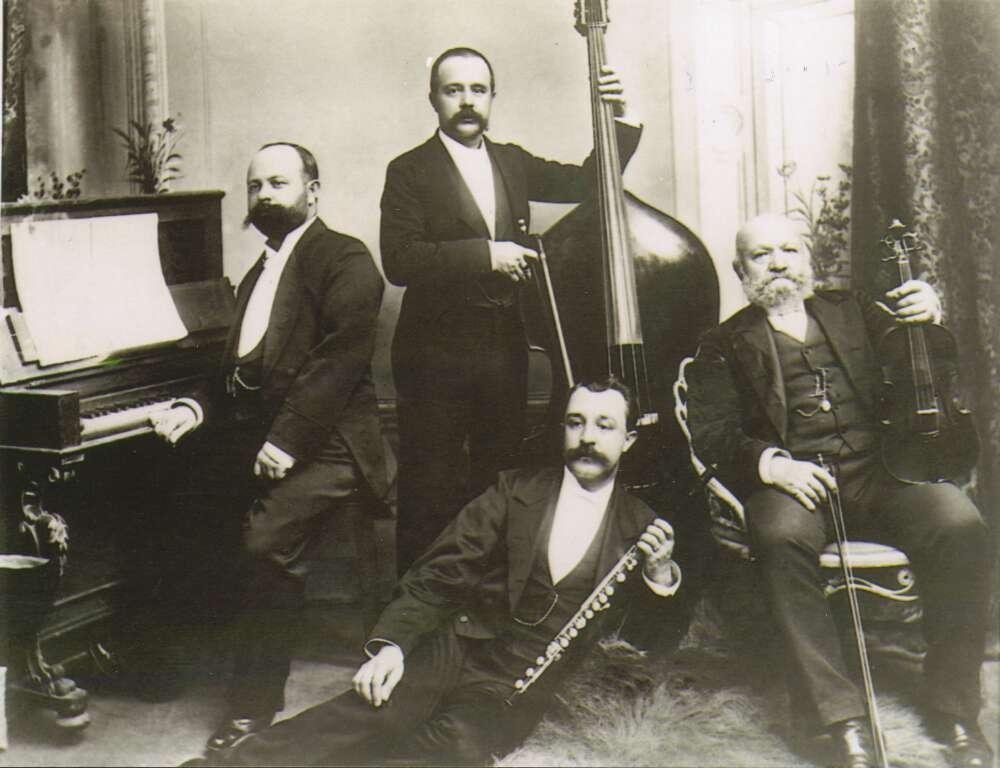
The Benvenuti Collection
The Benvenuti Collection presented here is a historic working library of orchestral music assembled and used in Australia between approximately 1880 and 1930. It reflects the repertoire performed by professional and semi-professional ensembles during a period when orchestral music was central to civic life, theatre, and public entertainment. Unlike collections of programs or ephemera, this archive consists primarily of the music itself — the scores and parts that were hired, rehearsed, and performed.
The collection is closely connected to the musical world shaped by the Benvenuti family, Italian-born musicians who settled in Queensland in the late nineteenth century and became deeply involved in teaching, performing, and organising ensembles. During this period, orchestral music was heard in theatres, town halls, clubs, and civic events across Brisbane and beyond. The repertoire preserved here offers rare insight into what audiences actually heard, rather than what was merely advertised or reviewed.
What makes this collection especially significant is the survival of handwritten hire tables inside many of the scores, documenting which orchestras borrowed the music and when. These records allow us to reconstruct patterns of repertoire use, ensemble activity, and musical taste across decades. This project aims not only to preserve these materials digitally, but to make them intelligible, searchable, and — wherever possible — performable again, restoring a largely forgotten chapter of Australia’s orchestral life.
The collection is closely connected to the musical world shaped by the Benvenuti family, Italian-born musicians who settled in Queensland in the late nineteenth century and became deeply involved in teaching, performing, and organising ensembles. During this period, orchestral music was heard in theatres, town halls, clubs, and civic events across Brisbane and beyond. The repertoire preserved here offers rare insight into what audiences actually heard, rather than what was merely advertised or reviewed.
What makes this collection especially significant is the survival of handwritten hire tables inside many of the scores, documenting which orchestras borrowed the music and when. These records allow us to reconstruct patterns of repertoire use, ensemble activity, and musical taste across decades. This project aims not only to preserve these materials digitally, but to make them intelligible, searchable, and — wherever possible — performable again, restoring a largely forgotten chapter of Australia’s orchestral life.